Crawl Space Dehumidifier: 5 Sizing and Buying Tips
A crawl space dehumidifier pulls moisture out of the air so a sealed crawl space stays dry. A regular household unit is a poor substitute, because crawl spaces are cool, cramped and hard to reach. Here are five tips for picking and placing one.
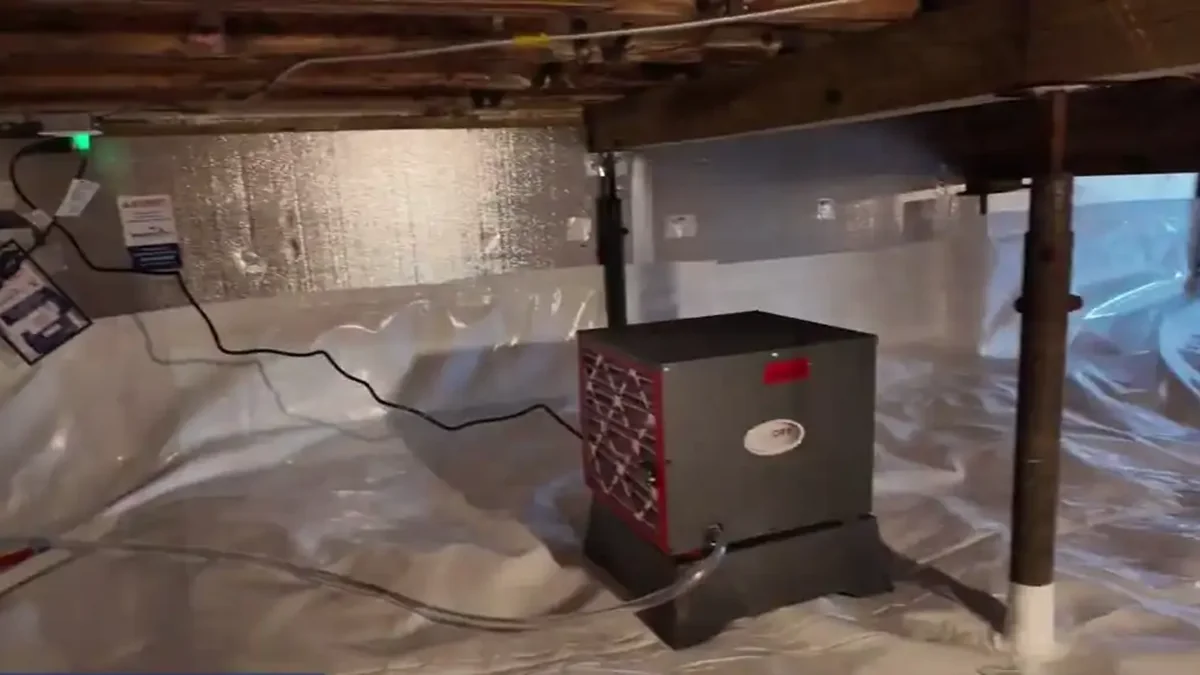
1. Why a sealed space still needs one
Sealing the liner and vents removes most moisture, but the soil, the house and any leaks still add some. Without humidity control, a sealed crawl space can stay damp. A dehumidifier keeps the air in a safe range so mold and rot do not come back. Most full jobs include one.
2. Size it to the space
Dehumidifiers are rated in pints removed per day. Bigger or wetter spaces need more capacity, and many residential crawl spaces use units rated from roughly 70 to 120 pints per day, though this is a general rule, not a spec. Ratings assume specific test conditions, so cool crawl spaces may see lower real output. Ask the installer to size the unit for your square footage and moisture level.
3. Choose crawl-space-rated equipment
Look for units designed for crawl spaces: low temperature operation, a built-in humidistat, and a way to drain without emptying a bucket. Standard living-room units can ice up in cool conditions and fail early. Buy from a source that offers a clear warranty and support.
4. Plan the drain
The water has to go somewhere. A gravity drain to the exterior works if the slope allows. Otherwise a condensate pump pushes water out through a line. Make sure the drain cannot freeze, kink or back up, and check it regularly. A blocked drain can flood the unit or the liner.
5. Place and maintain it
Mount the unit on a platform off the ground, near the center of the space or where air circulates best, and leave room to reach the filter. Clean or replace the filter on schedule and check the drain each season. Many units can report humidity or sound an alarm, which is worth having if you rarely enter the space.
What humidity level should you aim for?
Many building-science sources suggest keeping a crawl space at or below roughly 60 percent relative humidity, and some pros target a lower number. The EPA notes that controlling moisture is the key to limiting mold growth. Place a small hygrometer in the crawl space and look at it monthly. If readings stay high, ask a pro to check for leaks or air entry.
Running cost and upkeep
A dehumidifier uses electricity, so expect a modest increase in your bill, and the amount depends on the unit and how wet the space is. Budget for filter changes and eventually replacement. This ongoing cost is a fair part of deciding whether encapsulation is worth it. For price context, see our cost guide.
Talk to a local crawl space pro
Call now to describe your crawl space and get a free, no-obligation estimate from an independent local contractor.
Free estimate. No obligation.
Spec sheet terms in plain English
- Pints per day: the water a unit removes in 24 hours. Ratings are measured at stated temperature and humidity, so compare units at the same conditions, because a crawl space is cooler than the rooms used for testing.
- LGR (low-grain refrigerant): a refrigerant unit designed to keep pulling moisture from cool, damp air, a common pick for crawl spaces.
- Desiccant: uses a drying wheel instead of cooling coils and can work in colder spaces, usually at higher energy use.
- Condensate pump or gravity drain: a built-in pump lifts water to an outdoor line or sump when gravity cannot carry it.
- Humidistat: a built-in control that holds your target humidity. Confirm it with a separate hygrometer.
- ENERGY STAR rating: a sign of lower running cost for the same moisture removal.
Frequently asked questions
Can I use a regular dehumidifier in a crawl space?
No, a regular household dehumidifier is not recommended for a crawl space. Household units are built for warm, open rooms, not cool, tight, damp spaces, so they can ice up, fail early or need constant emptying. Use a unit rated for crawl spaces, sized to the area, with a proper drain.
Does a dehumidifier replace a vapor barrier?
No. A dehumidifier does not replace a vapor barrier. Without a ground liner, the soil keeps releasing moisture into the air, so the unit runs constantly and struggles to hold a healthy humidity level. The two work best together: the liner cuts the moisture supply and the dehumidifier removes what remains.
How often should I check it?
Check the humidity reading about once a month and inspect the drain line and filter at least each season. A crawl space dehumidifier should hold your target humidity steadily, so a rising reading, a full tank or a blocked drain is a sign to service the unit or call the installer.
Is a dehumidifier included in encapsulation?
Often, but not always. Many full crawl space encapsulation packages include a dehumidifier, while basic liner-only quotes do not. Ask whether the unit is in the written quote, which model and size is used, how it drains and what warranty covers the equipment.
Crawl Space Saver is a free referral service. We are not a contractor. We connect homeowners with independent local crawl space professionals, who set their own prices and do the work.