Crawl Space Encapsulation Cost in 2026: What You Will Really Pay
Crawl space encapsulation cost varies mainly with the size of the space and how much prep it needs. Published 2026 guides, including the Palm Building cost guide, put the national average around $5,500, with published ranges running from roughly $1,500 to $15,000, so real quotes can land far below or well above that. This page shows what drives the number so a quote makes sense when you get one.
What is the average price of encapsulating a crawl space?
Most guides quote a wide band instead of one number because no two crawl spaces are alike. A small, dry, clean space can cost a few thousand dollars. A large one with standing water, rotted insulation or heavy mold can cost several times that, because the extra work is not the liner itself. The national average is a midpoint, nothing more. Your region matters too: labor and material prices in Nashville, Raleigh, Richmond and Virginia Beach differ from each other and from rural areas.
How crawl space costs break down
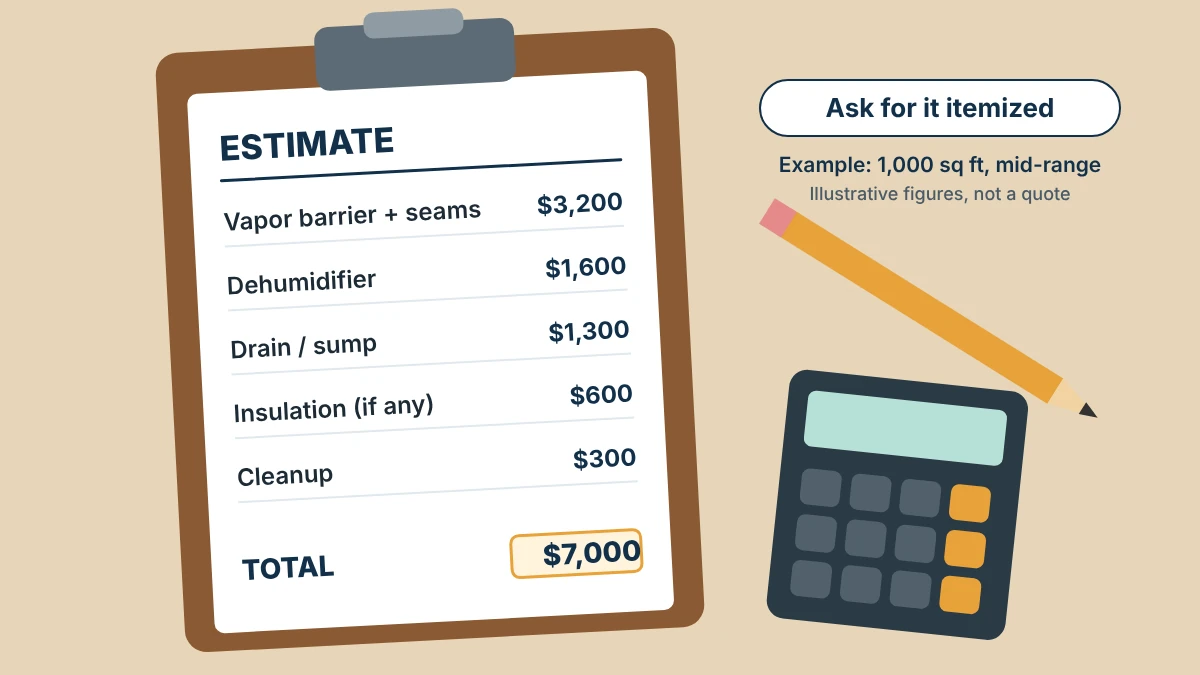
Contractors usually price the job by square foot, then add line items. The table below shows how a quote tends to be built. The dollar rates are illustrative assumptions to show the math, not quotes or published prices.
| Home crawl space | Illustrative low ($4/sq ft) | Illustrative mid ($7/sq ft) | Illustrative high ($10/sq ft) |
|---|---|---|---|
| 500 sq ft | $2,000 | $3,500 | $5,000 |
| 1,000 sq ft | $4,000 | $7,000 | $10,000 |
| 1,500 sq ft | $6,000 | $10,500 | $15,000 |
If a contractor quotes a rate far outside the range you see from three or four companies, ask them to explain the difference line by line.
What changes the encapsulation price
Several factors move a quote up or down:
- Square footage and height. More ground and wall area means more liner, tape and labor, and tight spaces slow the crew.
- Liner thickness. Thicker, reinforced barriers cost more but resist tears from foot traffic and stored items.
- Water problems. Standing water or poor drainage may require a sump pump or drain system, which is priced separately.
- Dehumidifier. A sealed crawl space still needs humidity control. A quality unit adds equipment cost and a small ongoing electric bill.
- Prep work. Removing old insulation, debris, mold or pests before installation adds labor.
- Insulation and repairs. Wall insulation, rim joist sealing and fixing damaged joists are often optional add-ons.
- Access and location. Hard-to-reach spaces and higher-cost metro areas raise the bill.
Ways to keep the cost reasonable
Saving money does not mean cutting corners. Get at least three written estimates so you can compare scope as well as price. Ask whether quotes include the dehumidifier, the warranty length and cleanup. Fix gutters and grading first, since directing roof runoff away from the foundation can reduce how much waterproofing your crawl space needs. Beware of pressure to sign the same day or “limited time” discounts.
Does crawl space encapsulation pay for itself?
It can, but rarely as fast as a salesperson will tell you. Lower humidity can reduce mold and rot repairs, a drier subfloor protects insulation and a sealed space can ease the load on your HVAC. ENERGY STAR’s crawl space page links to practical guides on sealing and insulating crawl spaces. Savings depend on your house and climate, so treat any specific payback claim with caution.
Hoping insurance will help with the bill? Usually it will not, because encapsulation counts as an upgrade. See whether insurance covers crawl space encapsulation before you assume.
Get a free local estimate
Call to describe your crawl space. An independent local pro will explain the price range for your home, with no obligation.
Free estimate. No obligation.
Extras that change the final bill
Most quotes start with the liner and dehumidifier, then grow with whatever the inspection turns up. Common add-ons include a permit or inspection fee where your city requires one, pest and termite treatment, hauling away old insulation and debris, and asbestos testing in very old homes before anything is disturbed. Wet sites may need a French drain or interior drain tile, a sump pump and a discharge line, which is the territory covered in our post on encapsulation vs waterproofing. Others add a new access door, vent sealing, or wall insulation such as rigid foam board, spray foam or fiberglass batts (see the insulation guide). Ask for a written, itemized bid instead of a loose estimate, and ask whether financing is offered. Some utilities and local programs offer rebates for air sealing and insulation, so check yours before you sign. An average space often takes a few days, and longer when repairs are needed.
Frequently asked questions
How much does it cost per square foot?
Per-square-foot rates vary by contractor, region and the condition of the space, and published guides give wide ranges. Collect several written quotes and compare the scope behind each rate, such as liner thickness, drainage, dehumidifier and warranty, instead of focusing on the per-foot number alone.
Is a cheaper quote a bad sign?
Not always, but check what it leaves out. A cheaper quote may skip the dehumidifier, use a thin liner, ignore drainage or offer no warranty. Compare the scope line by line, and ask the low bidder to confirm in writing what is included before you decide.
Can I finance the work?
Many contractors offer payment plans or financing, but terms differ. Read the interest rate, fees and total repayment cost before agreeing, compare it with paying from savings, and make sure the financing does not change the contract price. Never sign anything you have not read in full.
Does homeowners insurance cover encapsulation?
Standard homeowners policies generally treat encapsulation as maintenance or an upgrade rather than a covered loss, though policies differ. Sudden damage such as a burst pipe may be covered, but prevention work usually is not. Ask your insurer in writing before assuming any help with the bill.
How long does a liner last?
Quality liners are designed to last for many years, but lifespan depends on thickness, installation quality and how often the space is entered. Heavier reinforced liners resist tears better. The dehumidifier and seals need periodic checks, and the warranty length your contractor offers is a useful clue.
Crawl Space Saver is a free referral service. We are not a contractor. We connect homeowners with independent local crawl space professionals, who set their own prices and do the work.