Crawl Space Radon: Risk, Testing and Mitigation
Radon is a radioactive gas that comes up out of the soil, and a crawl space sits right on that soil. The EPA says to fix a home at 4 pCi/L or higher and to consider fixing it between 2 and 4. The only way to know your level is to test. Sealing and covering the ground does not replace that test, and the EPA does not recommend sealing alone as a fix.
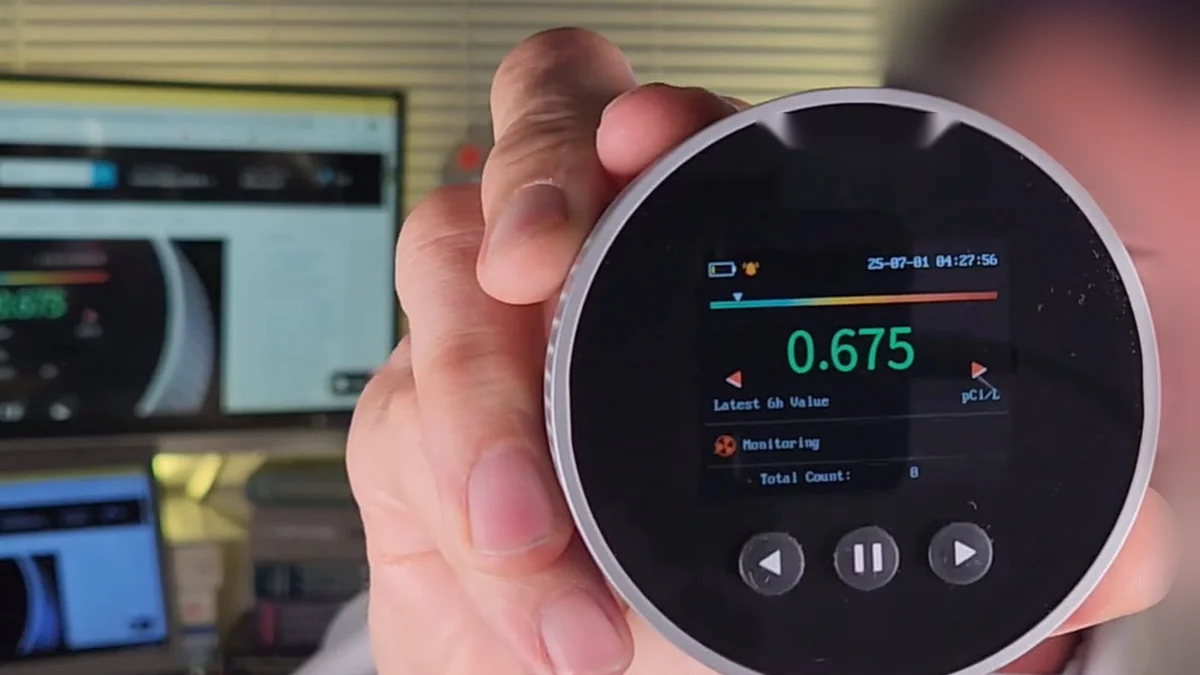
Why crawl spaces matter for radon
Radon forms as uranium in the ground breaks down, and it moves through soil as a gas. A house pulls some of the air from under it, because warm air leaves through the upper floors and replacement air comes in from below. With a crawl space, that air passes through the dirt floor, vents, gaps around pipes and the floor above. Any foundation type can have a radon problem, including slab, basement and crawl space homes, so the test is what counts, not the foundation.
The numbers that matter
| Measure | What the EPA says |
|---|---|
| Fix the home | 4 pCi/L or higher |
| Consider fixing | Between 2 and 4 pCi/L |
| Lung cancer deaths | About 21,000 a year in the US, about 2,900 in people who never smoked |
| Ranking | Leading cause among nonsmokers, second overall after smoking |
Those figures come from the EPA’s page on the health risk of radon.
What the states say
The three states we serve all push testing, and none of them says crawl space homes are exempt.
- Tennessee. The Tennessee Radon Program says about one in four homes tested through the program is above 4 pCi/L. Levels are higher in East Tennessee, but action-level readings have turned up in every county. It gives out about 6,000 free test kits a year, and the radon hotline is 1-800-232-1139.
- Virginia. The Virginia Department of Health’s indoor radon program lists 46 counties and 15 cities in EPA Zone 1 (highest risk) and 24 counties and 8 cities in Zone 2. Under state law, radon testers and mitigators must be certified by NRPP or NRSB.
- North Carolina. The NC Radon Program recommends that every home be tested and links to lists of certified testers and mitigators.
Look up your own county on those pages. A zone map shows an average, and houses next door to each other can read differently.
How to test
The EPA’s Citizen’s Guide to Radon gives the basics.
- Pick a test. Short-term tests run from 2 to 90 days. Long-term tests run longer than 90 days and show your year-round average better.
- Place it right. Put the kit on the lowest lived-in level, in a regularly used room, at least 20 inches off the floor. That means the living space above your crawl space, not the crawl space itself, and not the kitchen or bathroom.
- Repeat if high. If a short-term result is 4 or higher, follow up with a long-term test or a second short-term test. If the first result is more than twice 4, do the second test right away.
Does sealing a crawl space change radon?
Honest answer: nobody can promise it will go either way. The EPA does not recommend sealing alone as a radon fix. In its guide to radon reduction, it says ventilating a crawl space naturally lowers radon by anywhere from 0 to 50 percent, and it treats actively depressurizing a crawl space as a less favorable option that needs attention to combustion appliances and to sealing the crawl space off from the house. We found no solid study showing that a liner by itself cuts radon. On Green Building Advisor, one reply to a homeowner said there are too many variables to be sure and suggested monitoring, and at least one homeowner on another Green Building Advisor page reported readings going up after unventing a crawl space. Those are stories, not data.
So treat it simply. Test before the work. Radon moves up and down over time, so test again a few weeks after and again in a different season. If the number is 4 or higher, you fix it with a system built for radon, not with more plastic.
What actually fixes radon
For crawl space homes, the EPA calls sub-membrane suction the most effective method when it is done properly. A heavy plastic sheet covers the ground, a vent pipe runs under the sheet to a fan, and the fan pulls the gas out and vents it outside. This is the same plastic-over-soil idea as encapsulation, with a pipe and fan added. If you are having a liner installed anyway, ask the installer or a radon pro whether the vent pipe can go under it now or later, since the sheet is open and easy to work on during the install.
The EPA says to hire a contractor trained for radon, to get references and to get more than one estimate. It does not give a dollar range, only that typical costs are comparable to other common home repairs.
Who to call
Crawl Space Saver refers crawl space pros. We do not refer radon contractors. Look for a certified tester or mitigator through your state’s program (the three links above), and ask any crawl space company whether they hold radon credentials or work with someone who does.
Planning to seal your crawl space?
Test for radon first, then call. We will connect you with an independent local pro who can look at the space and tell you what is needed.
Free estimate. No obligation.
Frequently asked questions
Are crawl space homes more likely to have high radon?
Any home can have it, whether it sits on a slab, a basement or a crawl space. The foundation matters less than the soil and the way air moves through the house, which is why every home should be tested.
Will a vapor barrier or dehumidifier remove radon?
Neither is designed to. A vapor barrier controls moisture, and a dehumidifier removes water from the air. Only a radon system with a vent pipe and fan, or in some cases added ventilation, is meant to lower radon.
Can I test for radon myself?
Yes. Home kits are sold online and in stores, and some states give them away. Tennessee, for example, runs a free kit program. Follow the instructions, place the kit 20 inches off the floor in a lived-in room and mail it in or read it as directed.
How much does radon mitigation cost?
The EPA gives no dollar figure. It says costs are about the same as other common home repairs and depend on the house, so get more than one estimate from certified contractors.
Crawl Space Saver is a free referral service. We are not a contractor. We connect homeowners with independent local crawl space professionals, who set their own prices and do the work.