Crawl Space Encapsulation vs Waterproofing: 5 Differences
Crawl space encapsulation vs waterproofing is what homeowners run into when two contractors recommend different fixes for the same damp space. They are not rival products. One handles vapor and air, the other handles liquid water, and many crawl spaces need both. Here are five differences that show which problem you have.
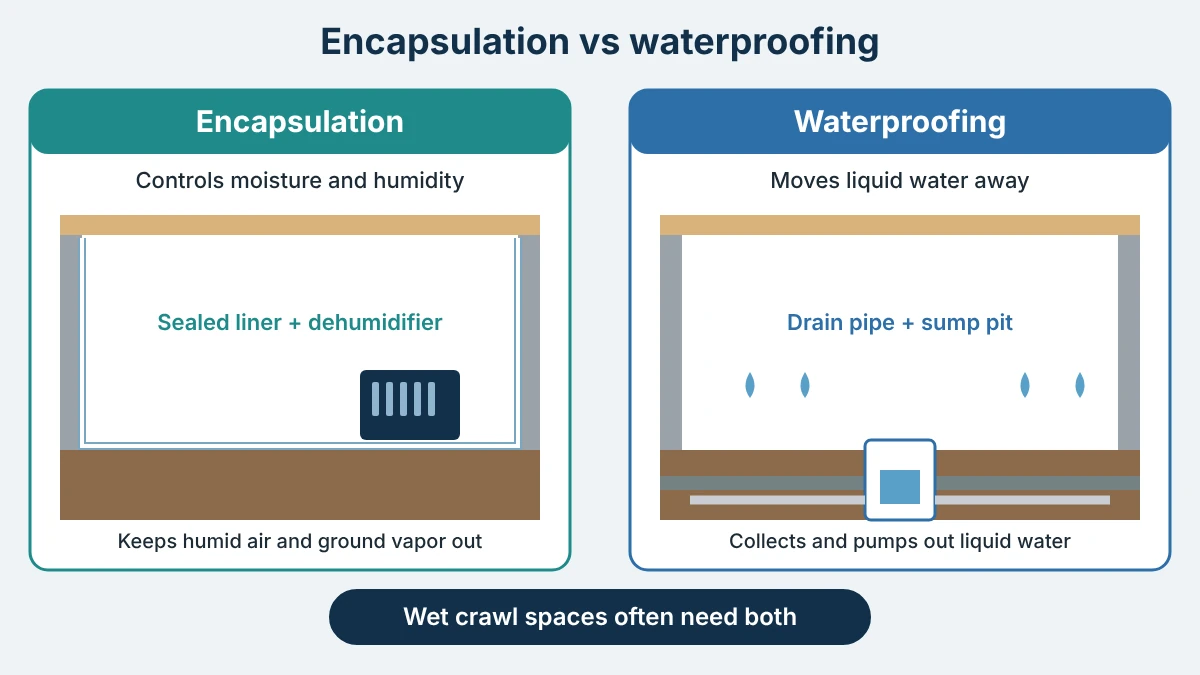
1. They solve different moisture problems
Moisture reaches a crawl space two ways. Liquid water enters through walls, floors or poor drainage after rain. Water vapor rises from damp soil and drifts in as humid air through vents. Waterproofing deals with the first, using tools like drains, sump pumps, grading and sealed foundation cracks. Encapsulation deals with the second, using a liner, sealed vents and humidity control.
2. The materials and equipment differ
A waterproofing job centers on a perimeter drain, a sump pump with a discharge line and sometimes exterior work such as regrading or gutter fixes. An encapsulation job centers on a reinforced vapor barrier, sealed seams, closed vents and a dehumidifier. When both are needed, the liner is usually installed after the drainage work so it covers a dry surface.
3. You can spot each problem differently
Signs of a liquid water problem include standing water, damp patches that appear after storms, mineral stains on walls and soil that stays muddy. Signs of a vapor problem include a musty smell in humid weather, condensation on ducts and pipes, damp insulation and humidity readings that stay high. The crawl space humidity guide explains how to measure it.
4. Doing only one can leave the problem unsolved
A liner laid over a space that floods may trap water or float and shift. A sump pump in a space with open vents may keep water out but still leave the air humid enough for mold. The EPA reminds homeowners that moisture control is the key to mold control, and that means controlling both liquid and vapor.
5. They affect cost and scope differently
Waterproofing cost depends on the amount of drainage, pump capacity and any exterior work. Encapsulation cost depends mostly on square footage, liner type and the dehumidifier. Published national guides put average encapsulation near $5,500 with a wide range, and waterproofing is usually quoted separately. See the cost guide for how line items add up.
Crawl space encapsulation vs waterproofing: which one do you need?
If water pools or seeps after rain, start with waterproofing and then add a liner. If the soil is dry but the air is damp and smelly, encapsulation may be enough. If both are true, the best plan is a combined one with a clear order of work. An honest inspector can tell you which signs point to which, and the contractor should explain why before quoting.
Questions to settle before you hire
Ask each company to say in writing which problem it believes you have and which part of its quote addresses it. If a company recommends only one approach, ask what evidence they saw. Our contractor checklist and mistakes to avoid cover the questions that show a careful bid from a sales pitch.
What a combined job looks like
A typical combined project starts with grading and gutter fixes outside. Inside, the crew installs a perimeter drain and pump, cleans and levels the ground, then lays a reinforced liner up the walls and seals the seams. Finally they close the vents and add a dehumidifier. The full sequence is described in our guide to what encapsulation includes.
Talk to a local crawl space pro
Call now to describe your crawl space and get a free, no-obligation estimate from an independent local contractor.
Free estimate. No obligation.
Frequently asked questions
Is encapsulation a form of waterproofing?
Not exactly. Encapsulation controls vapor and air with a liner, sealed vents and humidity control, and it reduces seepage. Waterproofing manages liquid water with drains, pumps and grading, so encapsulation is not designed to handle flood-level water on its own.
Can I waterproof first and encapsulate later?
Yes, and many homeowners do. Fix drainage and grading first, then add the liner and humidity control on a dry surface. Just make sure the drainage work leaves the ground ready for a liner and that both contractors agree on the order of work.
Which is more expensive?
It depends on the site. Drainage and pumps can cost more on wet lots, while a dry lot may need only encapsulation. Published guides put encapsulation near $5,500 on average with a wide range, and waterproofing is usually quoted separately, so compare the scopes.
Does insurance cover either one?
Usually not, because insurers treat both as maintenance or upgrades. Sudden damage such as a burst pipe may be covered, but prevention work generally is not. See our post on insurance and encapsulation and ask your insurer in writing.
Talk to a local crawl space pro
Call now to describe your crawl space and get a free, no-obligation estimate from an independent local contractor.
Free estimate. No obligation.
Crawl Space Saver is a free referral service. We are not a contractor. We connect homeowners with independent local crawl space professionals, who set their own prices and do the work.