Crawl Space Smell: 6 Causes and How to Fix Them
A crawl space smell means something is wrong underneath the house. Because warm air rises, odors from the crawl space travel up through floors and into living areas, a movement known as the stack effect. Below are six common causes, one safety warning and the usual fixes.
Safety first: gas and sewage
If you smell rotten eggs or sulfur, you may have a natural gas leak. Leave the house and call your gas utility or emergency services from outside. If you smell sewage, a drain or vent pipe may be leaking, which is a health hazard and needs a plumber. Do not try to investigate these yourself.
6 common causes of a crawl space smell
1. Musty, earthy smell from moisture. Damp soil, wet insulation and high humidity create the classic basement-like odor. This is the most common cause in humid states.
2. Mold and mildew. Dark spots, white fuzz or fuzzy growth on joists and subfloor add a sharper musty odor. The EPA says moisture control is the key to mold control, so the source of the water matters.
3. Wood rot. Rotting framing smells sour and can feel soft or crumbly when probed. It signals long-term moisture and may need repair.
4. Dead animals or droppings. Rodents and other animals can die or nest in vented crawl spaces. The smell is strong and may come with scratching or droppings.
5. Leaking plumbing. Slow leaks keep the area wet and can add sewage or stagnant odors.
6. Standing water and poor drainage. Pooling after rain breeds bacteria and mold, and stagnant water has its own odor.
How to find the source
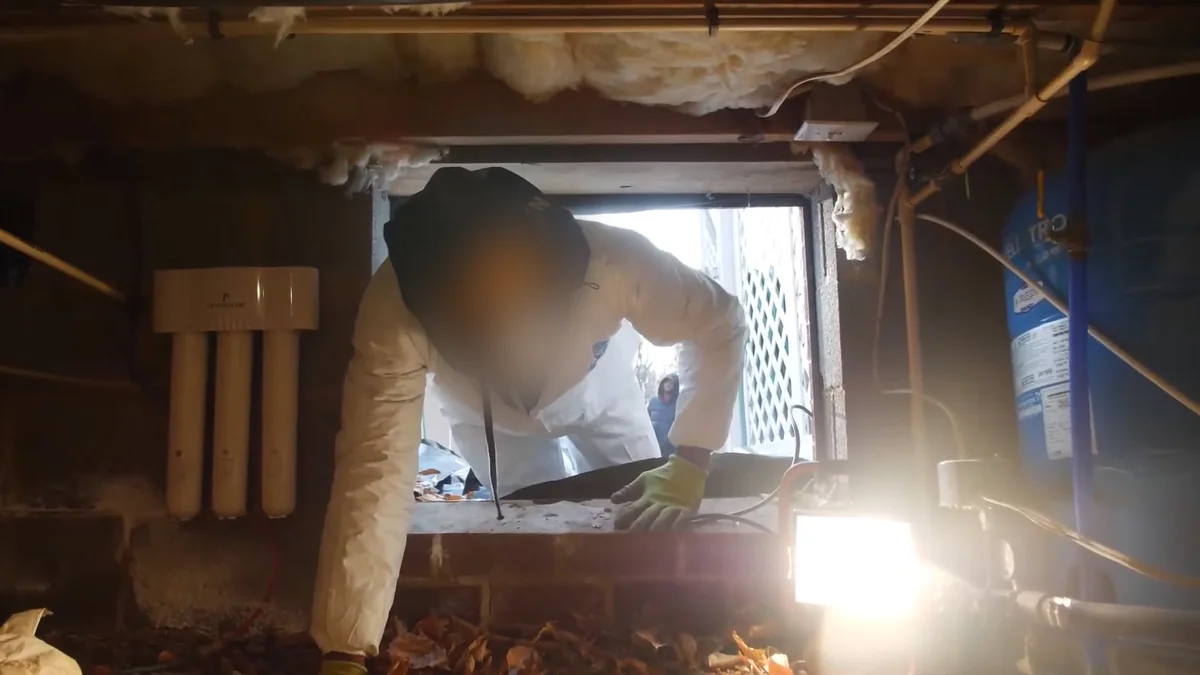
Check the crawl space when it is safe to do so, wearing a mask, gloves and eye protection. Look for standing water, wet insulation, mold-like growth, droppings and damaged pipes. Use a flashlight and take photos. Measure humidity with a hygrometer; if it reads high, moisture is likely behind the smell. If you find large mold areas, the EPA suggests considering professional help rather than handling them yourself, so call a pro.
How to fix it
The fix depends on the cause. Plumbing leaks need a plumber, animals need removal and exclusion, and gas or sewage smells need immediate professional attention. For moisture and mold odors, the lasting fix is to control the moisture itself: cover the ground with a vapor barrier, seal the vents and manage humidity with a dehumidifier. Cleaning without fixing the moisture only brings the smell back. Our guide to crawl space humidity walks through the steps.
Will air fresheners or fans help?
They cover it up for a day or two, and fans can pull in more humid air. The smell is a symptom, so go after the cause.
When encapsulation makes sense
If the cause is chronic dampness, sealing the crawl space usually clears odors for good, once existing mold or rot is cleaned or repaired. See our cost guide for what that involves, and our before and after guide for what should change afterward.
Smelling something under the house?
Call to describe the odor. An independent local pro can inspect and explain your options, with no obligation.
Free estimate. No obligation.
Frequently asked questions
Why does my house smell like a basement?
A damp crawl space is a common cause, because air moves upward from it into the house through gaps around pipes, ducts and the floor. Moisture, mold, rot or animals can all create a basement-like odor. Finding the source under the house is the first step.
Is a musty crawl space smell dangerous?
Mold and moisture can affect indoor air quality, and some people are more sensitive than others. A musty smell is a sign to find and fix the source, not a reason to panic. If you have health symptoms, talk to your doctor, and fix the moisture promptly.
Will the smell go away after encapsulation?
Usually, once the moisture is controlled and any mold, rot or animals are dealt with first. Encapsulation removes the dampness that makes odors, but it will not clear a dead animal, sewage leak or heavily moldy material by itself. Expect days to weeks for the smell to fade.
Should I test for mold?
Testing is not always necessary. Fixing visible moisture and growth matters more than lab results, and a professional can often confirm a problem by inspection. Ask what a test would change in your plan, such as identifying hidden mold, before paying for one.
Crawl Space Saver is a free referral service. We are not a contractor. We connect homeowners with independent local crawl space professionals, who set their own prices and do the work.