Does Crawl Space Encapsulation Prevent Termites? 5 Facts
No. Encapsulation lowers the moisture termites like, but it does not keep them out, and a liner or foam over the wall can hide their tracks from the people paid to look for them. Tell your termite company before the work, leave an inspection gap at the top of the wall and keep your contract in force.
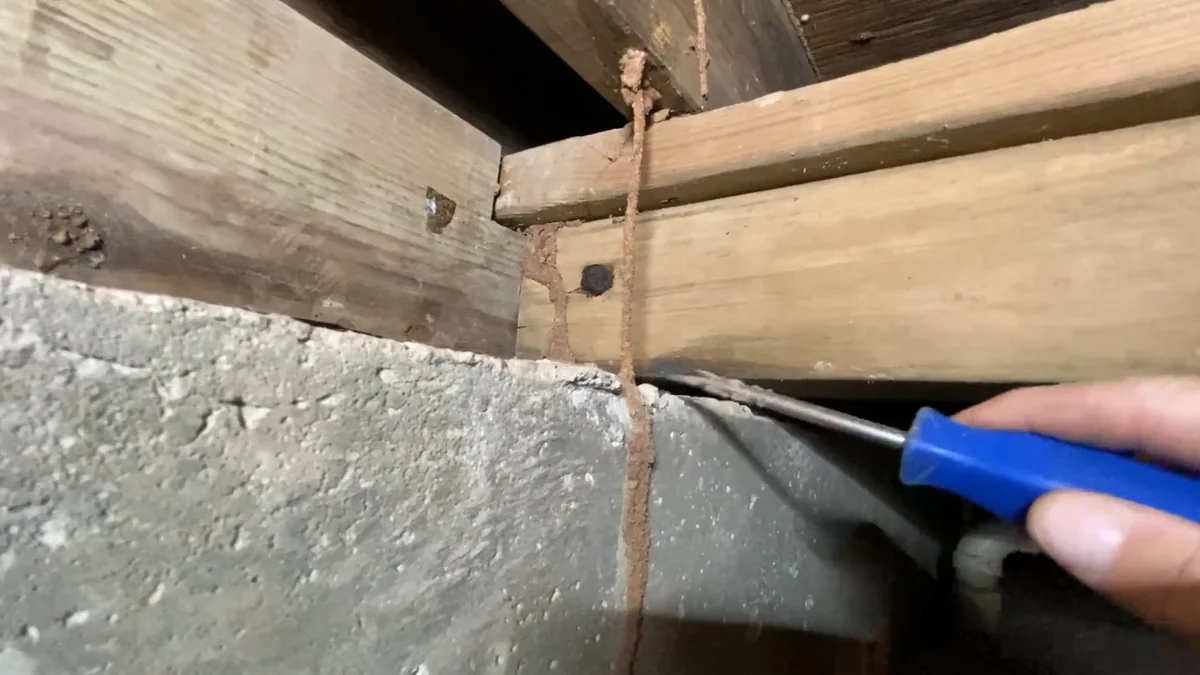
1. Termites follow moisture and hidden paths
Termites need damp wood and cover. Mississippi State Extension says hidden moisture is a major condition that draws termites, and that a leak behind foam can feed a colony above the ground. A dry, sealed crawl space removes one of the things they want, which is a reason sealing can help. It is not a barrier. Termites can come in through the wall, the sill or the wood above.
2. Foam and liners can hide the evidence
Termites do not eat foam, but Mississippi State Extension notes they can tunnel through it or behind it, and an inspector may only see the front surface. A pest control trade magazine, PCT, reported that foam covers the places inspectors check, like the inside of the foundation wall and the sill plate, and that some companies cancelled warranties or refused to write inspection letters on foam-covered homes. That piece is not new, so read it for the principle, not for today’s numbers. A plastic liner run up the wall and over the sill can hide the same spots.
3. Leave an inspection gap
The fix everyone agrees on is a strip of bare wall. Advanced Energy’s guide to closed crawl spaces in the Southeast calls for a gap of at least 3 inches at the top of the masonry wall, between the top of the wall covering and the top of the wall. Where the walls are insulated, it also asks for a separate 3-inch gap at the bottom of the insulation, which is there to stop it wicking up water. It suggests an optional coat of light paint over the top gap so an inspector can see termite tubes. A building science detail hosted by the Pacific Northwest National Laboratory shows a metal termite shield out from the sill plate and an inspection gap above the interior foam.
Pest pros do not all agree that a gap is enough. The PCT article quotes an Auburn University researcher saying there is no data showing a 6-inch gap gives adequate inspection. So three inches is a starting point from one source, not a promise. Ask your own termite company what they need to see.
4. Call your termite company first
Advanced Energy says to coordinate with the pest control company as early as possible, so the closed crawl space does not get in the way of treatment or the warranty. It also notes that where there is a service contract, the pest company may be held responsible for damage after the treatment date, which is one reason they care. Mississippi State Extension warns that adding foam after a treatment may lead the company to cancel the contract.
Ask them three things: what they need to see and reach, whether the contract stays in force, and whether they want the wood treated before it is covered. PCT says some pest pros will treat crawl space wood with borate before foam goes in. Get the answers in writing, and give a copy to your installer.
5. Know what a good installer does
- Leaves the inspection strip and does not cover the sill plate or wall top with foam.
- Seals the ground cover and seams up the wall below the gap, and takes photos before and after.
- Keeps access to the soil and the wall so a treatment can still be done. PCT notes that re-treating is hard where parts of the crawl space cannot be reached.
- Hands you a note for your termite company that says what was done and where the gap is.
- Puts a yearly look on your calendar.
Our 12 questions to ask a contractor list includes this one. Mistakes like these also appear in our red flags post.
When you buy or sell
Mississippi State Extension also notes that a buyer may get a termite report listing areas that could not be inspected. A sealed crawl space with a clear gap, photos and a termite company note makes that report cleaner. If you are selling, keep the paperwork.
Want a pro who works with your termite company?
Call and mention your termite contract. We will connect you with an independent local crawl space pro who can plan around it.
Free estimate. No obligation.
Frequently asked questions
Will encapsulation void my termite warranty?
It can. Adding foam after a treatment may lead the pest company to cancel the contract, according to Mississippi State Extension. Ask first and get the answer in writing before the work starts.
How big should the inspection gap be?
Advanced Energy’s Southeast guide says at least 3 inches at the top of the masonry wall. Some pest pros want more, so ask yours what they need to see and follow that.
Do termites eat spray foam?
No, but they can tunnel through it or behind it and stay hidden, as Mississippi State Extension explains. That is why the gap and a yearly inspection matter.
Can my termite company still treat after sealing?
Often, but it depends on access. Liquid treatments need to reach the soil and wall, and PCT says re-treating is hard where parts of the crawl space are blocked. Plan the access with the installer before they start.
Talk to a local crawl space pro
Call now to describe your crawl space and get a free, no-obligation estimate from an independent local contractor.
Free estimate. No obligation.
Crawl Space Saver is a free referral service. We are not a contractor. We connect homeowners with independent local crawl space professionals, who set their own prices and do the work.